If your dog turns into a runaway artist the moment you say “bath time,” you’re far from alone. Bathtime anxiety is one of the most common concerns we hear from pet parents here in Naples, and it’s almost always fixable once you understand what’s driving the fear and how to work with it, not against it.
As local, hands-on groomers, we bathe anxious, wiggly, and downright terrified dogs every single day. Below, we’re breaking down exactly why dogs dislike baths and sharing the same techniques our team uses in the grooming salon to turn bathtime from a battle into a calm, even enjoyable, routine.
Why Do Dogs Dislike Baths?
It’s one of the more curious contradictions in dog behavior: many dogs will happily cannonball into a lake or splash through puddles, yet panic the moment they’re placed in a tub. The difference usually comes down to control, environment, and past experience — not water itself.
Is it normal for dogs to hate baths? Very. Some dogs are only mildly bothered and tolerate the process with a resigned sigh. Others react as if it’s a full-blown emergency. Neither reaction means something is wrong with your dog — it typically reflects personality, early exposure, and how bathtime has been handled in the past.
Is bathing a dog cruel? Not at all. Regular bathing is part of responsible care. Skipping it allows dirt, dander, and oils to build up in the coat, which affects insulation and comfort and can make it harder for your dog to regulate temperature. Dogs who go too long between baths are also more prone to matting, skin irritation, and parasites. The goal isn’t to make bathtime unpleasant , it’s to make it manageable.
Here are the most common reasons dogs develop bath anxiety:
- Fear of being trapped — A tub is small and enclosed with no easy exit, which can heighten anxiety before the water even starts.
- Fear of the unknown — Puppies and dogs who weren’t bathed early in life often find the whole experience foreign and unsettling.
- Picking up on your energy — Dogs are highly attuned to human body language and tone. If you’re tense or dreading the bath, your dog will likely sense it.
- Past negative experiences — Rescue dogs or dogs with a rough history may carry real trauma around bathing. But ordinary moments can create the same effect, including:
- Water in the ears or nose
- Soap stinging the eyes
- Slipping on a wet surface
- Water that’s too hot or too cold
- Overpowering shampoo scents
- Losing their familiar natural scent afterward
Once you understand the “why,” the “how” becomes much easier.
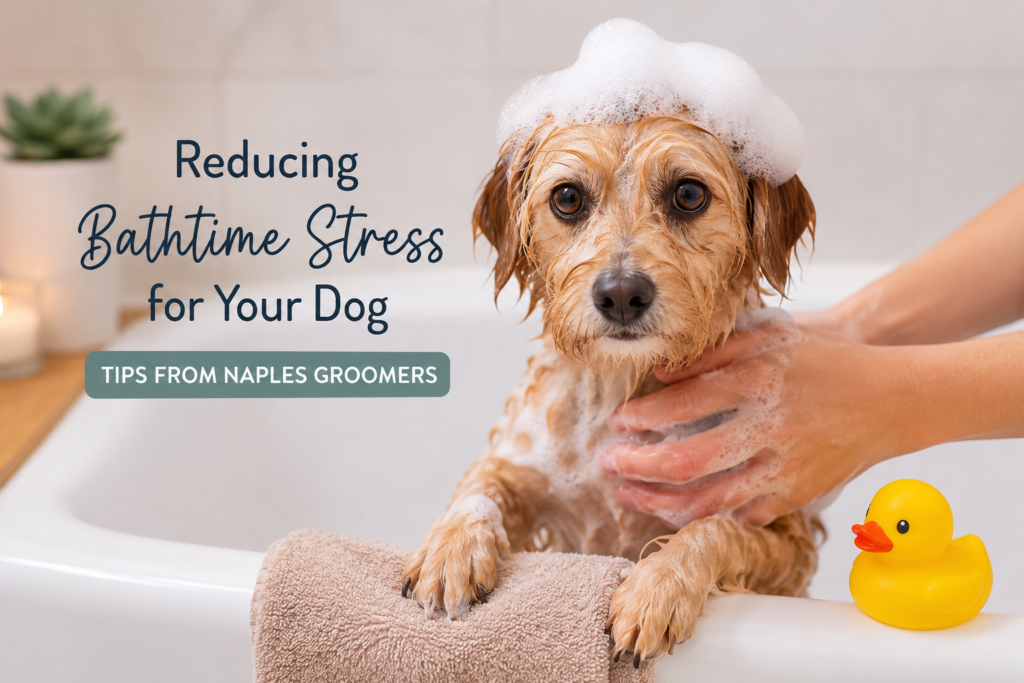
8 Tips to Reduce Bathtime Stress for Your Dog
1. Add a Non-Slip Surface
Place a rubber mat or thick towel at the bottom of the tub. Stability is often the single biggest factor in whether a dog feels safe or panicked during a bath.
2. Brush Before You Bathe
Removing loose fur, mats, and tangles beforehand makes washing faster and reduces overall time spent in the tub.
3. Test the Water Temperature
Lukewarm water — never hot, never cold — helps your dog stay relaxed instead of tense.
4. Use a Lick Mat Distraction
Smear a thin layer of xylitol-free peanut butter onto a suction lick mat and stick it to the tub wall to keep your dog pleasantly occupied.
5. Protect the Eyes and Ears
Use a cup or pitcher instead of a sprayer for more control, and use a damp washcloth for the face rather than pouring or spraying water near the eyes and ears.
6. Keep Your Energy Calm and Slow
Speak softly, move deliberately, and avoid rushing. Your calm energy helps regulate your dog’s.
7. Choose a Mild, Unscented Shampoo
Strong fragrances can overwhelm a dog’s sensitive nose and make the experience more unpleasant than it needs to be.
8. Reward Immediately After
A high-value treat, a favorite toy, or a quick play session right after the bath helps build a positive association over time.
A few extra notes:
- Stay consistent. Regular brushing between baths means less matting and shorter, easier bath sessions overall.
- Skip baths during a bad mood. If you’re frustrated or rushed, it’s better to wait for a calmer moment.
- Consider going outside. In warm weather, a kiddie pool or hose outdoors can feel less confining than an indoor tub for some dogs — just rinse thoroughly to remove all shampoo residue.
- Try waterless alternatives when needed. Pet-safe wipes or dry shampoo can bridge the gap for dogs who become highly stressed during full baths.
How Often Should You Bathe Your Dog?
Bathing frequency depends largely on coat type:
- Short, smooth coats: roughly every 1–3 months, more often if your dog loves mud puddles
- Medium or long coats: more frequent bathing is typically needed
- Thick, double coats: can usually go longer between baths, since natural shedding helps remove oil and dirt
Your vet or groomer can offer more specific guidance based on your dog’s breed, coat, and lifestyle.
When to Consider Professional Grooming Instead
Some dogs do best with an experienced groomer handling bathtime altogether , especially dogs who are extremely fearful, have mobility issues, or need specialized handling. Naples pet parents often find that a professional bath and grooming session reduces stress for everyone involved. Learn more about our dog grooming services or book an appointment with our Naples team.
For additional guidance on gradually desensitizing an anxious dog to water and the bathing environment, the American Kennel Club’s guide on bathing dogs that hate baths offers helpful step-by-step strategies.
Frequently Asked Questions
Q: Is it normal for my dog to hate baths even if they love swimming? A: Yes, this is very common. Open water feels freeing and controllable, while a tub is confined and often paired with things dogs dislike, like soap or restraint.
Q: Why is my dog suddenly afraid of baths when they weren’t before? A: Sudden fear can stem from a negative experience (slipping, cold water, a loud noise) or an unrelated health issue, like joint pain making it uncomfortable to stand in the tub. If the fear appeared suddenly, it’s worth ruling out a physical cause with your vet.
Q: How often should I bathe my dog? A: Most dogs do well with a bath every 4–6 weeks on average, though this varies by coat type, skin condition, and activity level. Over-bathing can dry out the skin and coat.
Q: What can I use instead of a full bath if my dog panics? A: Waterless options like pet-safe wipes or dry shampoo can be a good in-between solution for dogs who become highly stressed during full baths.
Q: Should I use the shower or the tub for a nervous dog? A: The tub is generally better. Falling water from a showerhead can feel unpredictable and frightening, while a handheld sprayer or cup used in a tub gives you more control.
Q: Can bath-related anxiety be fixed, or is it permanent? A: In most cases, it can improve significantly with patience, positive reinforcement, and gradual exposure. Severe cases, especially in rescue dogs with a traumatic history, may benefit from professional or behavioral support.
Q: Can professional groomers help with a dog that hates baths? A: Yes. Experienced groomers are trained in low-stress handling techniques and can often bathe anxious dogs more calmly and efficiently than at home. Contact our Naples team if you’d like help.
Looking for hands-on help? Our Naples grooming team specializes in gentle, low-stress bathing for anxious and first-time dogs. Schedule a visit today.