Taking your dog to a groomer for the first time feels like a big deal — because it genuinely is. Most owners feel a mix of excitement and worry before that first appointment. However, with the right preparation, the whole experience becomes much smoother for both of you. This guide gives you everything — the right age to start, exactly what happens inside the salon, how to prepare at home, and what to do after the visit is done.
Most dogs should visit a groomer between 12 and 16 weeks old, right after core vaccinations are complete. A first visit covers a gentle bath, blow dry, nail trim, and ear cleaning only. Therefore, expect 1 to 2 hours total. The entire goal is a calm and positive experience — not a perfect haircut.
Why the First Grooming Visit Matters So Much
Most people think of grooming as a cosmetic thing — make the dog look nice. In reality, however, professional grooming is also a health check. A good groomer examines areas most owners miss every day — paw pads, ear canals, skin under the coat, nail condition, and any lumps or irritations developing quietly out of sight.
How the First Visit Shapes Every Future Appointment
Beyond health, the first visit shapes every future appointment. A dog who has a gentle and positive first experience grows into a relaxed adult that walks happily into the salon. On the other hand, a dog who has a rushed or frightening first experience can develop grooming anxiety that lasts for years. That single appointment carries real long-term weight, so getting it right the first time is absolutely worth every minute of preparation.
What Age Should a Dog First Visit a Groomer?
The ideal age is between 12 and 16 weeks, right after core vaccinations are complete. During this period, new sounds, smells, surfaces, and handling experiences leave lasting positive impressions. As a result, a puppy introduced to professional grooming during this window almost always grows into a dog that tolerates or even enjoys salon visits as an adult.
- 12 to 16 weeks — the sweet spot, easiest adjustment
- After 16 weeks — still works well, but needs extra patience
- Adult dogs new to grooming — short gentle visits over several appointments builds trust gradually
- Adult rescue dogs — go especially slow, since previous experiences are unknown
Can I Bring My Puppy Before Vaccinations Are Complete?
Interestingly, some groomers accept puppies for a brief introductory visit before vaccinations are fully complete — simply to sniff around, meet the groomer, and get comfortable with the space without any actual grooming. Ask your local salon if they offer this option. It can make the real first appointment dramatically smoother.
What Vaccinations Does My Dog Need Before Going to the Groomer?
Before any grooming appointment, your dog needs to be current on three core vaccines.
- Rabies — legally required in most states
- DHPPL — covers Distemper, Hepatitis, Parvovirus, Parainfluenza, Leptospirosis
- Bordetella — protects against kennel cough, which spreads easily in group settings
Always bring vaccination records to the appointment. A groomer who asks for them is doing their job properly. Furthermore, it means they take the health of every dog in their care seriously — including yours. Your vet may additionally recommend flea and tick prevention before a first grooming visit, particularly if your dog will be around other animals.
How Do I Prepare My Dog at Home Before the First Visit?
Home preparation is the single biggest factor in how a first visit goes. Dogs who arrive familiar with being handled settle within minutes. In contrast, dogs who have never had their paws touched can turn a nail trim into a stressful ordeal for everyone involved.
Two Weeks Before the Appointment
Start these habits at least one to two weeks before the visit.
- Touch paws, toes, ears, and tail gently every single day — reward with treats each time
- Open your dog’s mouth gently and touch their gums — groomers check here too
- Turn on a hair dryer in the next room while feeding treats — this builds familiarity with the sound
- Run a soft brush over your dog’s coat daily — even five minutes helps enormously
- Let your dog sniff grooming tools like brushes, combs, and nail clippers before using them
Morning of the Appointment
- Take a long walk or play session to burn off nervous energy
- Feed your dog normally, however avoid a very large meal right before since some dogs get car sick
- Have vaccination records ready to hand over at drop-off
- Write down anything the groomer should know — anxiety triggers, skin sensitivities, past injuries, food allergies, and favorite treats
At Drop-Off — This Part Matters More Than Most People Realize
- Keep your goodbye under 30 seconds and stay calm
- Do not make a long emotional fuss, because your dog reads every signal you give
- Hand over your notes and walk away with confidence
- Additionally, do not linger outside the door or peek through windows
Dogs whose owners leave calmly settle within a few minutes. However, dogs whose owners hover outside stay on high alert for much longer. That one habit makes a bigger difference than almost anything else on this list.
What Do Groomers Wish Every Owner Knew?
This section does not appear in most first-visit guides. These are the things experienced groomers say repeatedly — and that most owners only learn after several appointments.
Tell Your Groomer Everything Upfront
If your dog has bitten someone before, has a skin condition, recently had surgery, hates having their nails done, or gets car sick — say so at booking, not at drop-off. This information changes the plan entirely and allows the groomer to prepare properly. Moreover, sharing your dog’s favorite treats or comfort items can help create positive associations during the appointment.
Bring a Photo of the Cut You Want
If you have a specific style in mind, save a photo to your phone and show it at drop-off. Just like human hair, the groomer may not be able to achieve the exact look depending on your dog’s coat condition. Nevertheless, a photo gives them a clear target to work toward and avoids misunderstandings completely.
Book During Quieter Times for Nervous Dogs
A first visit during a busy Saturday morning is considerably harder on an anxious dog than a quiet Tuesday afternoon. Therefore, ask your salon when their slower periods are and book accordingly. The calmer environment makes a real difference for first-timers.
Regular Appointments Are Easier and Cheaper
Dogs groomed consistently every 6 to 8 weeks have less matting, shorter sessions, better behavior on the table, and often lower costs overall. In contrast, long gaps between appointments mean more work each time, which also means higher prices and more stress for your dog.
How Do I Know If I Can Trust a Groomer?
Green Flags — Signs of a Groomer Worth Trusting
- Asks for vaccination records before booking
- Asks about your dog’s history, temperament, and health — not just the breed
- Explains what they plan to do before they start
- Contacts you if anything changes from the original plan
- Their space is visibly clean, organized, and smells fresh
- Holds recognized certifications such as AKC Safety Certification
- Never makes you feel rushed or silly for asking questions
- Gives honest feedback at pickup about how the visit actually went
Red Flags — Walk Away From These
- No vaccination requirements at all
- No questions about your dog’s history or behavior
- Rushing drop-off with no conversation whatsoever
- Evasive answers about experience or certifications
- Dogs left unattended in cages for long periods
A groomer worth trusting wants you informed and confident. Furthermore, a confident owner produces a calmer dog — these two things are directly connected.
What Happens Step by Step During a First Grooming Visit?
Step 1 — Arrival and Full Assessment (5 to 10 minutes)
The groomer examines coat condition, checks for matting, assesses nail length, and watches carefully how your dog reacts to the environment. This evaluation shapes the entire session. For instance, a dog with severe matting may need a shorter cut than planned, while a nervous dog may need extra settling time before anything begins. A good groomer always adjusts the plan based on what they find — and calls you if the changes are significant.
Step 2 — Pre-Bath Brush Out (5 to 15 minutes)
Before water touches the coat, a thorough brush removes loose fur and works through any minor tangles. This step matters because wet tangles tighten dramatically and become much harder to remove than dry ones. Consequently, skipping this step makes the entire bath harder for both the dog and the groomer.
Step 3 — Warm Bath (15 to 25 minutes)
Shampoo is selected based on your dog’s coat type and any skin sensitivities noted during the assessment. Water is kept comfortably lukewarm throughout — never hot. Additionally, dogs with allergies or skin conditions receive gentler or medicated formulas. Learn more about our dog wash services and medicated bath options.
Step 4 — Blow Dry (15 to 25 minutes)
This is where most first-timers show the most anxiety. Professional dryers are more powerful than home dryers and the sound is completely unfamiliar. However, good groomers start at a distance, use low heat settings, and pause frequently. Towel drying between machine drying sessions helps ease nervous dogs through it. Furthermore, brushing continues throughout the drying process to prevent new tangles and ensure the coat dries evenly all the way to the skin.
Step 5 — Nail Trim and Ear Cleaning (10 to 15 minutes)
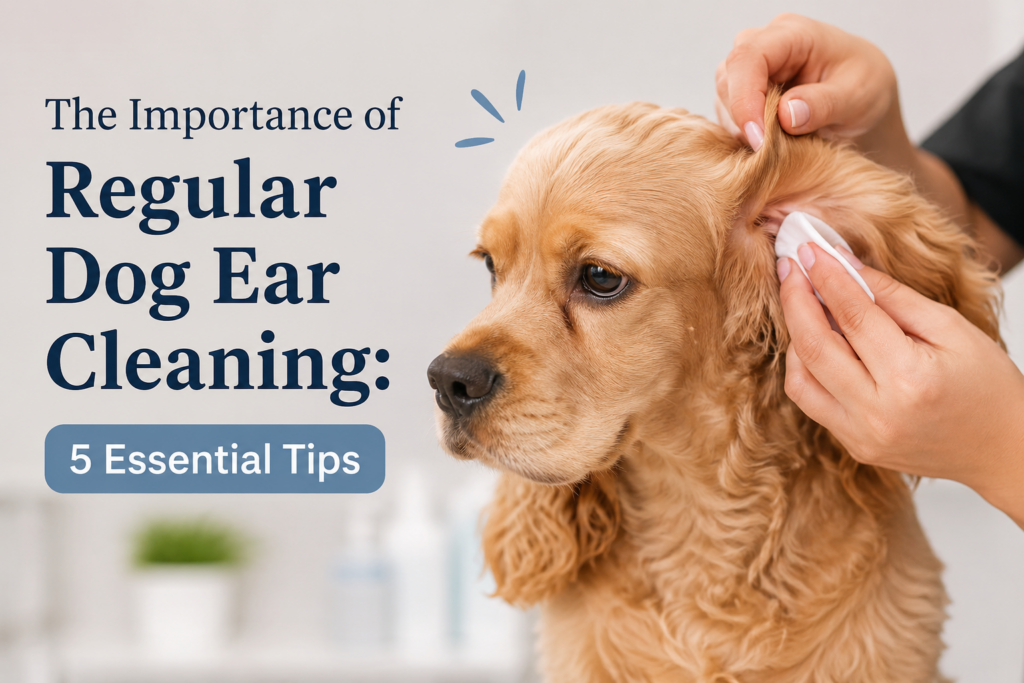
Nails are trimmed gradually in small careful amounts to stay safely away from the quick — the blood vessel running inside each nail. Cutting the quick causes sharp pain and creates lasting nail-trim anxiety, so a good groomer never rushes this step. Meanwhile, ears are gently cleaned to remove wax buildup and checked carefully for signs of infection or irritation. Learn more about nail trimming and ear cleaning.
Step 6 — Face Trim and Sanitary Trim (5 to 10 minutes)
Fur around the eyes is trimmed for visibility and comfort. Similarly, the sanitary area is tidied for hygiene. Both of these require the dog to hold still in areas they are often sensitive about. Therefore, if your dog is too nervous, this step may be skipped entirely on a first visit — and that is always the right call.
Step 7 — Haircut (Often Skipped on First Visit)
A full body haircut is only done if your dog is genuinely relaxed and comfortable by this point in the session. Most groomers skip it entirely on a first visit or offer only a simple puppy cut instead. The experience always comes before the result. Learn more about our dog body haircut services.
Step 8 — Final Inspection and Finish
The groomer does a complete check — even trimming, no missed spots, coat laying correctly. Finally, a light spritz of pet-safe deodorizing spray and often a small bow or bandana before your dog rests comfortably in a clean pen while waiting for pickup.
How Long Does a First Visit Take?
| Dog Size | Coat Type | Estimated Time |
|---|---|---|
| Small under 15 lbs | Short or simple coat | 1 to 1.5 hours |
| Small under 15 lbs | Long or curly coat | 1.5 to 2 hours |
| Medium 15 to 50 lbs | Average coat | 1.5 to 2.5 hours |
| Large 50 lbs plus | Average coat | 2 to 3 hours |
| Large 50 lbs plus | Thick double coat | 3 to 4 hours |
| Any size | Very anxious dog | Add 30 to 60 minutes |
What is a Puppy Cut?
A puppy cut is a short even trim the same length all over the body. It is the standard recommendation for any first haircut for three reasons. First, it requires significantly less handling time than breed-specific cuts. Second, it looks neat and clean on almost any breed. Third, it grows out evenly which means the next appointment starts from a clean consistent baseline. As a result, most groomers recommend a puppy cut or simple bath and tidy for any dog’s first professional visit regardless of age.
Breed-Specific First Visit Notes
Different coat types need different approaches on a first visit. Here is a quick guide by coat type.
Poodles and Doodle Breeds
These fast-growing curly coats mat quickly without regular brushing. Therefore, a first visit should establish a 4 to 6 week grooming schedule right away. Waiting too long between visits on these breeds creates severe matting problems that are painful and expensive to fix.
Double-Coated Breeds
Golden Retrievers, Huskies, Labs, and similar breeds should never be shaved. Instead, groomers trim around feet, ears, sanitary areas, and feathering only. De-shedding treatments work extremely well for these breeds and make a noticeable difference at home. Learn about our dog wash and de-shedding services.
Short-Coated Breeds
Beagles, Boxers, and similar dogs have simpler grooming needs. Consequently, a bath, nail trim, ear cleaning, and brush out covers most of what they need. Every 8 to 12 weeks is usually sufficient for these breeds.
Dogs With Skin Allergies
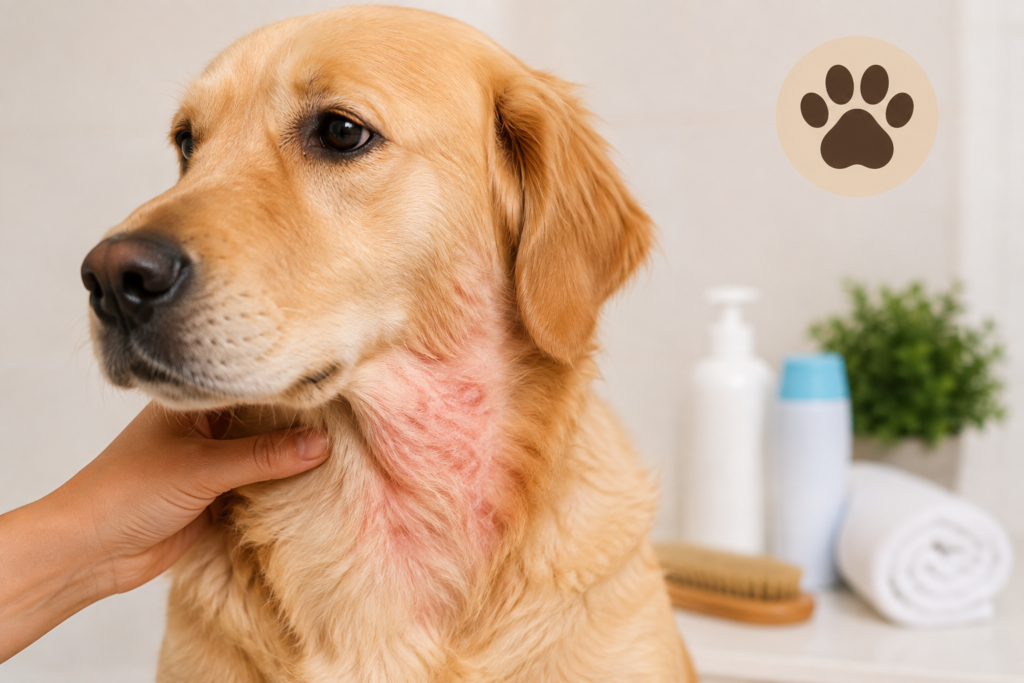
Always mention skin allergies at booking. Using the wrong shampoo on sensitive skin causes real flare-ups. Moreover, medicated shampoos make a genuine difference for dogs with ongoing skin conditions. Read more about allergic skin care and our medicated bath service.
Heavy Coated Breeds
Shih Tzus, Lhasa Apsos, and similar breeds require especially careful detangling before the bath. Furthermore, regular brushing at home is non-negotiable between visits for these coat types. Even a few weeks without brushing can create mats that take significant additional salon time to address.
What Should I Expect at Pickup?
Expect a clean, tired, and slightly overwhelmed dog. The combination of warm water, unfamiliar smells, consistent handling, and dryer sounds is genuinely exhausting — even for dogs who enjoyed every minute. As a result, many dogs sleep deeply and for longer than usual after their first professional grooming appointment. This is completely normal and nothing to worry about.
What Your Groomer Should Tell You at Pickup
Your groomer should give you honest feedback about how the visit went — what your dog did well, where they showed stress, anything unusual noticed on the skin or ears or nails, and a recommended return schedule. Additionally, when you get home, give your dog calm praise, a small treat, and quiet downtime. Let them rest and decompress fully before any exciting activities.
How to Keep the Positive Momentum Going
The first visit is just the beginning. Here is how to make every future appointment easier.
- Book the next appointment before you leave — consistency is everything with grooming
- Keep brushing at home between visits — even 5 minutes daily prevents matting and makes salon sessions faster
- Practice nail touching at home weekly — dogs handled regularly at home are calmer on the grooming table
- Reward your dog after every appointment — a favorite treat immediately after pickup builds strong positive association
Furthermore, read our full guide on reducing bathtime stress at home for more tips on building grooming confidence between visits.
Grooming Is a Health Investment, Not Just a Beauty Appointment
Regular grooming catches early signs of skin conditions, ear infections, nail overgrowth, eye discharge, lumps, and coat changes that can indicate underlying health issues. In fact, many owners have discovered early health problems during routine grooming appointments — problems caught early enough to treat easily.
Moreover, a dog groomed consistently is simply a more comfortable dog. Overgrown nails change how a dog walks and put stress on joints over time. Matted fur pulls on skin constantly. Ear buildup leads to painful infections. These are not cosmetic problems — they directly affect daily quality of life.
Therefore, think of professional grooming the way you think of dental cleanings or annual vet checkups. It is preventive care that keeps small problems small.
Frequently Asked Questions
-
Should I stay while my dog is being groomed?
No — and this surprises most first-time owners. Dogs almost always settle faster once their owner leaves the building. When you are present, your dog stays in a state of anticipation waiting for you. Once you leave, however, they accept the situation and follow the groomer's lead. Therefore, say a calm brief goodbye and leave completely.
-
What if my dog has never been bathed at home?
Start bathing your dog at home at least once before the salon visit. It does not have to be perfect — simply enough to introduce warm water, shampoo, and blow drying in a familiar safe environment. As a result, a dog who has experienced a home bath handles a professional bath far more calmly.
-
What if my dog has matted fur?
Tell your groomer before arriving. Severe mats require shaving out because brushing causes real pain and can tear skin. Going forward, consistent brushing at home between visits prevents matting entirely. Read our guide on reducing bathtime stress for home coat maintenance tips.
Final Thoughts
A first grooming visit is one of those small moments that shapes years of future ones. Get it right — right age, right preparation, right groomer — and you end up with a dog that walks happily through the salon door for the rest of its life. In contrast, getting it wrong creates grooming anxiety that simply did not have to exist.
The recipe is genuinely simple. Start early. Spend two weeks preparing at home. Choose a certified groomer who asks good questions, takes their time, and tells you honestly how your dog did. Most importantly, leave calmly at drop-off — because your dog is watching you do it.
That first visit is not about a haircut. It is about trust. Build that trust once and grooming becomes easy for life.